Add this to the list of things that I cannot get enough of:
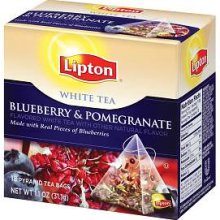

Add this to the list of things that I cannot get enough of:
New York was lovely. I was so ready to come home, though. The flight back was miserable, compounded by the woman behind us. Imagine all of the stereotypes about people from Queens (yeah, the negative ones), and then multiply them by 10. It was ear-splitting, nails-on-a-chalkboard unbearable.
Alas, I arrived home to a very anxious boyfriend and a beautiful bouquet of roses. (I haven’t gotten roses since high school – this was unexpected and wonderful.)
I will make you a lovely post and show you pictures, but until then, I’ve got a darker cloud hanging over my head. I’m in a state of terribly unhealthy uncertainty.
There are so many wonderful things. There have been so many wonderful moments. My life thus far has been a very beautiful place to be. Ever since I found out that I didn’t get into grad school, I’ve been anxious. Not the kind of anxious that threatens to overwhelm you at any moment, but the kind of anxious that creeps through your body, ever-present in your blood, your thoughts, your dreams. I’m uncertain of the future, and I am well aware that I stand on the edge of a great divide. It’s now or never (sort of). Where I am situated offers me a wide variety of options and it’s time for me to do some soul-searching and figure out where I want to belong in this world. That’s the easy part, even though at the moment, I am entirely overwhelmed. After that, I have to set forward and strive to accomplish the goals I haven’t set yet. You see? It’s all so much and I’m finding myself incredibly jealous of my friends who know exactly what they want to do.
On the plus side, you can look forward to more years of panicky blog posts and overstated melodrama, so that may or may not be a plus.

Today is the 15th Anniversary of Biggie’s death. AARP know’s what’s up.
Sometimes making choices is easy. There is a right and a wrong. There is at least enough to sway you to choose one option over the other. And sometimes, it’s not easy. There is no right, wrong, or otherwise. Everything is equal.
I’m staring my choices straight in the face and I’m torn. Stability, security, comfortable vs. unknown, unproven, possibly uncomfortable.
It’s terrifying. I know that no matter what the choice is, I will win. But I also know that not everyone involved will.
Sometimes there’s nothing wrong, but there could be so much more right.
Is that enough to make the leap?

I love this silly fat cat. He’s sassy and smart and a complete ass. Always adopt used pets!
It’s been awhile, I know. Work keeps getting in the way of the rest of my life.
But alas, I’ve got something to say that’s important enough for me to give up some time to say it.
Jacob posted a link to a Rolling Stone article on my Facebook wall. (I think we still get a subscription to the magazine, but I hadn’t read it, so this goes to show that I’m out of touch with everything.)
It was about bullying and gay teens. While I think the article has some serious flaws (look at me, being all critical), I do think that it raises some serious questions about problems with having policies specifically related to homosexuality in our public schools.
But more than that, I (never thought I’d say this) partially agree with one of the anti-gay groups when they say, “…much of society seems not to be looking closely and openly at all possible causes of the tragedies.” Granted, they did precede that by saying “Because homosexual activists have hijacked and exploited teen suicides for their moral and political utility…” so that still makes them really insensitive and downright hateful.
We do need to really examine these tragedies. Being a child, an adolescent, a young adult: it all really sucks. I had such a rough time because of bullying in grade school – I remember crying and begging to go a new school. I withdrew quite a bit in high school but came out of it just fine. Bullying isn’t just about gay kids. Bullying is about anything, everything. Kids are really cruel. And it blows, for everyone involved. People carry those emotional scars with them long after the bullying has ended.
So let’s talk about parenting, because that’s where those little seeds of hatred get planted, nourished, and encouraged to grow. These parents hold certain political ideologies, certain religious beliefs, and live by an individual moral code. It stands to reason that their children will as well, having grown up hearing their parents espouse their beliefs, complaining about taxes, etc. That’s not the problem. The problem is when parents fail to explain to their children that there are other (equal) ways of thinking. I respect your beliefs; I respect your rights; I cannot respect your hatred, no matter where it comes from. We’re all guilty of putting a blanket over the “other” and forgetting that those people all believe those things because it gives them strength, hope, faith, solace, comfort, joy.
But at what point does my right to believe in whatever I want stop? At the point at which it infringes on someone else’s right to believe in whatever they want. This is why schoolyards are going to remain a political battleground.
They say that knowledge is power and it’s true. I don’t know why we’re against teaching our kids anything. At one point in the Rolling Stone article, a woman named Barb Anderson is quoted as saying, “Open your eyes, people. What if a 15-year-old is seduced into homosexual behavior and then contracts AIDS?” I wasn’t aware that we’re still under the impression that only the gays get AIDS. Yes, 61% of new HIV infections are found in “men who have sex with men” or MSM, according to the CDC. (I always read MSM as metro-sexual men, so that’s problematic for my brain.) But 23% of all new infections are in women. And the race most affected? Black men.
How many people know this? How many people can pull this out of their heads? Not knowing breeds fear and fear breeds the sad situations we’re seeing today. Fear breeds death, hatred, bigotry, disgust, anger. Fear does not bring about positive change, cooperation, or community.
I just don’t know why we’re not teaching our children everything that we can teach them. Creationism, evolution, reincarnation – we should be teaching it all. French, algebra, history, banned books: learn it all! I’m much more comfortable arguing with someone who’s chosen to believe what they believe than I am arguing with someone who’s had their beliefs molded and shaped for them. Schools should be a place of academic achievement, not fear. Teachers report being afraid to address the bullying situations that may be based on perceived or real homosexuality because they don’t want to lose their jobs. So these kids are left alone and helpless to cope with bullying that they don’t understand and can’t control.
Youth is a very fragile time. Even though these people are quickly growing into young adults, they’re not there yet. They need to be taught. Educated. Supported. Mental health issues among teenagers are increasing. Depression, suicide, eating disorders and behaviors are becoming increasingly more and more common.
The US lacks the mental health resources to treat the growing number of kids displaying symptoms. The social stigma surrounding mental health prevents a lot of progress and instead, causes much more harm to our society than a progressive dialogue would. (I’m not known for my avoidance of issues, but I’ve been avoiding talking about my own ADHD diagnosis and treatment for fear of negative repercussions.) We medicate, medicate, medicate. I don’t agree that that’s a great solution to any problem, mental health related or not. But it is too bad there’s no medication to make insensitive, insecure teens blind to differences.
But that’s exactly it: these teens (both the ones doing the bullying and the ones being bullied) are insecure. They’re trying to establish their own identities while being assaulted by their own hormones on a daily basis. They’re trying to figure out where they fit in the world, and they’re using anything they can for guidance. Instead of knowing that their bullying might stem from their attempts to appear more masculine, they think that this bullying makes them more powerful, respected, admired. It doesn’t. It makes them weaker than they’d be if they approached these in-school social situations more logically. But they don’t know that, because no one has ever explained all of that to them. Let’s start teaching sociology in the fourth grade and see how far that gets us. If kids could understand more about what they’re feeling and experiencing, they’re far more likely to make the mature choices not to engage in behaviors. But instead, they’re left to fend for themselves, trying to make sense of everything without appearing weak. Newsflash: we’re all weak. We all need help, support, and guidance.
Feel-good seminars and classroom discussions aren’t going to help either. The message that these kids are getting is that being gay is all butt-sex and glitter. While that’s simply not true, they don’t have any real-life context for understanding homosexuality. In reality, being gay is just like being straight. Couples wear ugly sweaters and make dinner and fight about who’s going to take out the trash. Short-shorts aren’t the norm. But how are these kids going to understand that when we won’t talk about it, teach it, or protect the gay kids from being attacked? Oh wait, there’s always TV. (That’ll help.) Our examples are terrible representations of what gay is.
Gay. Bullying. Suicide. They go hand in hand and they exist separately. In order to get to the bottom of this to stop our kids from killing themselves or driving others to kill themselves, we need to take a long, hard look at the messages that we’re sending to them.
If I ever catch my kid(s) bullying, or engaging in any behavior that I find predatory, disrespectful, or downright offensive, there will be hell to pay. The parents of the kids who say things like, “You’re a fag and you deserve to die,” should be held accountable for the actions of their children. This is a really good example of when it’s okay to ask “What would Jesus do?” Your religions, whatever they may be, do not say that it’s okay to hurt other people. They do not say that it’s okay for you to taunt, tease, punish, and terrorize your peers.
Instead of fighting about what we can’t teach, let’s just teach it all. Let’s teach everything and let our kids learn to think for themselves. Let’s expose them to everything we can expose them to. Let’s make them cultured, intelligent, young people who have adventured, and failed, and come to understand the ways that the world works.
Let’s fight to end teen suicides. Let’s fight to end bullying. But more than that, we need to fight to give our kids the coping skills to handle these things when they do happen. We need to address these issues openly, so that when a kid thinks about committing suicide, they are able to reach out to someone who can help them. So that when a kid thinks about putting another kid down just so he/she can feel better about him/herself, that kid will think twice.
I know that it gets better, but they don’t. It’s up to us to guide them all through.
I adore this boy, but sometimes, I swear….
I’m a huge fan of wine. More than that, I’m a huge fan of affordable wine. There are plenty of delicious Malbecs for under $20, so both my bank account and myself can remain happy. Ha, but sometimes you do get what you pay for. I’m looking at you, $4.99 bottle of Gato Negro.
The article below serves to validate my frugality when it comes to purchasing wine:
Most Of Us Just Can’t Taste The Nuances In High-Priced Wines
02:56 am
March 6, 2012
EnlargeiStockphoto.comResearch suggests that most of us don’t or can’t taste the subtleties of fine wines.Have you ever splurged on a highly rated bottle of Burgundy or pinot noir, only to wonder whether a $10 or $15 bottle of red would have been just as good? The answer may depend on your biology.
A new study by researchers at Penn State finds that when it comes to appreciating the subtleties of wine, experts can taste things many of us can’t. “What we found is that the fundamental taste ability of an expert is different,” says John Hayes of Penn State.
So what explains this? Part of it has to do with training and experience. But our ability to identify nuances in wine is also influenced by physiology in our mouths and brains.
“We evaluated hundreds of wine drinkers,” says Hayes, by having them sample/taste a chemical that measures their reaction to bitter tastes. He found that wine experts — people such as wine writers, winemakers and wine retailers — were about 40 percent more sensitive to the bitterness than casual consumers of wine. They have a more acute sense of taste.
Hayes says his findings fit with prior research on so-calledsupertasters — people who are more sensitive to the sweetness of sugar, the sting of chili peppers and the saltiness of chips.
The experts I reached out to are not convinced that “biology” is as deterministic as the research may suggest. “There may be some people who are gifted tasters,” Dave McIntyre, who writes about wine for The Washington Post, wrote to me in an email. “But I think it’s mostly experience.”
He says he’s taken the time and made the effort to taste many, many wines. “If you taste enough Cabernet Sauvignon you’ll learn to tell it from Merlot,” MacIntyre says. And over time, if you pay attention, he says he thinks most people will heighten their ability to detect nuances.
But for those of us who are not inclined to invest a lot of time in wine-tasting, should we pay attention to those wine reviewers’ ratings and scores?
A 90-point rating may tell us that an expert thinks the wine is a good choice. And the higher the point rating, the higher the price point. But what if the critics’ palates are not in sync with ours?
“Wine shopping can be confusing and overwhelming,” Katherine Cole, a wine writer in Portland, wrote to us. She says to some extent, the point ratings can help us narrow our choices. When you spot a bottle in your price range, and you see one of those “shelf talkers” (the term she uses to describe those little tabs affixed to store shelves) that tout a 90-point rating (on a 100-point scale), it can make the decision easier. “Oh, Wine & Spiritsmagazine likes this wine, so it must be good.”
Experts all seem to acknowledge that there’s quite a bit of subjectivity involved in reviewing wine. “Every critic has his or her own taste,” Cole says, “so the same wine might garner wildly differing scores from a variety of critics.”
All of this leads me to the conclusion, that yes, I’ll try to use experience as my teacher. But I’m not going to be ashamed by my affordable favorites. I may not have the most experienced of wine palates, but I’ve found plenty of pleasant $10-$15 Syrahs and Malbecs — two of my favorites — and I’m sticking with them!
Tags: food science, flavor science, wine
Pictures of Chicago from Nick Debono Photography!
My trip to Chicago, IL…. Where do I begin haha
As a photographer there are certain locations, places, and destinations that will spark your interest and fit your style.. Chicago, was one of them. I had always wanted to go to Chicago, I heard so many things about this city good, and bad. I wouldn’t let the bad stop me. To star off here are some cool & interesting facts about Chicago:
1. Chicago was one of the first and largest municipalities to require public art as part of the renovation or construction of municipal buildings, with the passage of the Percentage-for-Arts Ordinance in 1978.
2. The Willis Tower (formerly Sears Tower) is the tallest building in the Western Hemisphere at 110 stories high. Its elevators are among the fastest in the world operating as fast as 1,600 feet per minute.
(continues below)

3. The first televised U.S. presidential candidates’ debate was…
View original post 475 more words


 a mile high and then some...