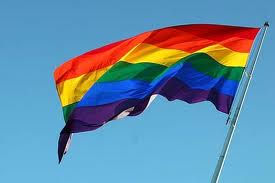
On Gay. On Suicide. On Bullying.

It’s been awhile, I know. Work keeps getting in the way of the rest of my life.

But alas, I’ve got something to say that’s important enough for me to give up some time to say it.

Jacob posted a link to a Rolling Stone article on my Facebook wall. (I think we still get a subscription to the magazine, but I hadn’t read it, so this goes to show that I’m out of touch with everything.)

It was about bullying and gay teens. While I think the article has some serious flaws (look at me, being all critical), I do think that it raises some serious questions about problems with having policies specifically related to homosexuality in our public schools.

But more than that, I (never thought I’d say this) partially agree with one of the anti-gay groups when they say, “…much of society seems not to be looking closely and openly at all possible causes of the tragedies.” Granted, they did precede that by saying “Because homosexual activists have hijacked and exploited teen suicides for their moral and political utility…” so that still makes them really insensitive and downright hateful.

We do need to really examine these tragedies. Being a child, an adolescent, a young adult: it all really sucks. I had such a rough time because of bullying in grade school – I remember crying and begging to go a new school. I withdrew quite a bit in high school but came out of it just fine. Bullying isn’t just about gay kids. Bullying is about anything, everything. Kids are really cruel. And it blows, for everyone involved. People carry those emotional scars with them long after the bullying has ended.

So let’s talk about parenting, because that’s where those little seeds of hatred get planted, nourished, and encouraged to grow. These parents hold certain political ideologies, certain religious beliefs, and live by an individual moral code. It stands to reason that their children will as well, having grown up hearing their parents espouse their beliefs, complaining about taxes, etc. That’s not the problem. The problem is when parents fail to explain to their children that there are other (equal) ways of thinking. I respect your beliefs; I respect your rights; I cannot respect your hatred, no matter where it comes from. We’re all guilty of putting a blanket over the “other” and forgetting that those people all believe those things because it gives them strength, hope, faith, solace, comfort, joy.

But at what point does my right to believe in whatever I want stop? At the point at which it infringes on someone else’s right to believe in whatever they want. This is why schoolyards are going to remain a political battleground.

They say that knowledge is power and it’s true. I don’t know why we’re against teaching our kids anything. At one point in the Rolling Stone article, a woman named Barb Anderson is quoted as saying, “Open your eyes, people. What if a 15-year-old is seduced into homosexual behavior and then contracts AIDS?” I wasn’t aware that we’re still under the impression that only the gays get AIDS. Yes, 61% of new HIV infections are found in “men who have sex with men” or MSM, according to the CDC. (I always read MSM as metro-sexual men, so that’s problematic for my brain.) But 23% of all new infections are in women. And the race most affected? Black men.
How many people know this? How many people can pull this out of their heads? Not knowing breeds fear and fear breeds the sad situations we’re seeing today. Fear breeds death, hatred, bigotry, disgust, anger. Fear does not bring about positive change, cooperation, or community.

I just don’t know why we’re not teaching our children everything that we can teach them. Creationism, evolution, reincarnation – we should be teaching it all. French, algebra, history, banned books: learn it all! I’m much more comfortable arguing with someone who’s chosen to believe what they believe than I am arguing with someone who’s had their beliefs molded and shaped for them. Schools should be a place of academic achievement, not fear. Teachers report being afraid to address the bullying situations that may be based on perceived or real homosexuality because they don’t want to lose their jobs. So these kids are left alone and helpless to cope with bullying that they don’t understand and can’t control.

Youth is a very fragile time. Even though these people are quickly growing into young adults, they’re not there yet. They need to be taught. Educated. Supported. Mental health issues among teenagers are increasing. Depression, suicide, eating disorders and behaviors are becoming increasingly more and more common.

The US lacks the mental health resources to treat the growing number of kids displaying symptoms. The social stigma surrounding mental health prevents a lot of progress and instead, causes much more harm to our society than a progressive dialogue would. (I’m not known for my avoidance of issues, but I’ve been avoiding talking about my own ADHD diagnosis and treatment for fear of negative repercussions.) We medicate, medicate, medicate. I don’t agree that that’s a great solution to any problem, mental health related or not. But it is too bad there’s no medication to make insensitive, insecure teens blind to differences.

But that’s exactly it: these teens (both the ones doing the bullying and the ones being bullied) are insecure. They’re trying to establish their own identities while being assaulted by their own hormones on a daily basis. They’re trying to figure out where they fit in the world, and they’re using anything they can for guidance. Instead of knowing that their bullying might stem from their attempts to appear more masculine, they think that this bullying makes them more powerful, respected, admired. It doesn’t. It makes them weaker than they’d be if they approached these in-school social situations more logically. But they don’t know that, because no one has ever explained all of that to them. Let’s start teaching sociology in the fourth grade and see how far that gets us. If kids could understand more about what they’re feeling and experiencing, they’re far more likely to make the mature choices not to engage in behaviors. But instead, they’re left to fend for themselves, trying to make sense of everything without appearing weak. Newsflash: we’re all weak. We all need help, support, and guidance.

Feel-good seminars and classroom discussions aren’t going to help either. The message that these kids are getting is that being gay is all butt-sex and glitter. While that’s simply not true, they don’t have any real-life context for understanding homosexuality. In reality, being gay is just like being straight. Couples wear ugly sweaters and make dinner and fight about who’s going to take out the trash. Short-shorts aren’t the norm. But how are these kids going to understand that when we won’t talk about it, teach it, or protect the gay kids from being attacked? Oh wait, there’s always TV. (That’ll help.) Our examples are terrible representations of what gay is.

Gay. Bullying. Suicide. They go hand in hand and they exist separately. In order to get to the bottom of this to stop our kids from killing themselves or driving others to kill themselves, we need to take a long, hard look at the messages that we’re sending to them.

If I ever catch my kid(s) bullying, or engaging in any behavior that I find predatory, disrespectful, or downright offensive, there will be hell to pay. The parents of the kids who say things like, “You’re a fag and you deserve to die,” should be held accountable for the actions of their children. This is a really good example of when it’s okay to ask “What would Jesus do?” Your religions, whatever they may be, do not say that it’s okay to hurt other people. They do not say that it’s okay for you to taunt, tease, punish, and terrorize your peers.

Instead of fighting about what we can’t teach, let’s just teach it all. Let’s teach everything and let our kids learn to think for themselves. Let’s expose them to everything we can expose them to. Let’s make them cultured, intelligent, young people who have adventured, and failed, and come to understand the ways that the world works.

Let’s fight to end teen suicides. Let’s fight to end bullying. But more than that, we need to fight to give our kids the coping skills to handle these things when they do happen. We need to address these issues openly, so that when a kid thinks about committing suicide, they are able to reach out to someone who can help them. So that when a kid thinks about putting another kid down just so he/she can feel better about him/herself, that kid will think twice.

I know that it gets better, but they don’t. It’s up to us to guide them all through.

On Virginia and Adoption

So Virginia wants to let state-funded (but private) adoption agencies discriminate based on the belief system of the agency? Doesn’t the government protect against that sort of discrimination?

Obviously, adoption is important. It so often gets overlooked. About a third of the kids currently sitting in Virginia foster care hope to eventually be adopted. Granted, those adoptions aren’t going to be arranged through these private agencies, but we’re talking about allocation of government funds. I say take funding away from any organization that wants to practice discrimination (in violation of federal law) and put that funding back into the badly broken foster system so that those kids can have a chance at a family.

You can’t guarantee that a set of potential parents that fits the “ideal” picture of a family is going to end up as an”ideal” set of parents. I mean, my family – heterosexual, white, Catholics – ended up divorced and really grumpy. What was once a rosy image of the perfect family was eventually shattered – just like half of the other rosy pictures of hetero families in the US. But G-d forbid we let the gays adopt! They’ll turn this country into a hub of immorality and sin! It’s like one commenter wrote sarcastically: “But what if the kids catch the gay?” What if, indeed.

Virnia adding ‘conscience clause’ to adoption laws

By ,

RICHMOND — Virginia will likely become the second state in the nation — after North Dakota — to allow private adoption agencies to turn away parents based on sexual orientation or religious and moral beliefs.

The General Assembly is considering a measure that would add a “conscience clause’’ to Virginia law that would allow state-funded, faith-based agencies to choose which parents are suitable for adoption based on the agencies’ beliefs.

Daniel Gri and James Abbott, who adopted two sons in California, say that through the proposed guidelines their adopted home of Virginia is further hampering gay people from adopting.

“It makes it seem like it’s not about sexual orientation,” said Gri, who lives in Oakton. “That’s a technique anti-gay organizations use.’’

But supporters of the legislation say it would protect religious freedom by ­allowing birth parents to choose an agency — and as a result, adoptive parents — who adhere to their religious beliefs.

“This measure will chisel into law the principle that people of faith can adhere to their convictions without fear of reprisal from those who would discriminate against their religious beliefs regarding how we should raise our children,” said House Deputy Majority Leader C. Todd Gilbert(R-Shenandoah).

The legislation’s fate became clear after Republicans took control of the state Senate and gained an even heftier majority in the House. The House voted overwhelmingly to pass the measure last week, largely along party lines, while the Senate is expected to vote this week.

Gov. Robert F. McDonnell (R) is expected to sign the legislation. He has repeatedly said that faith-based organizations should be able to make their own policies.

Virginia has 77 private agencies, 16 of them faith-based. They placed 557 of the state’s 2,503 adoptions last year, according to state figures. In total, the agencies and 120 local social services departments received $144 million in state and federal funds for child placement last year.

Who can adopt, and who can’t

The bill does not change who can adopt. State law does not allow unmarried couples — homosexual or heterosexual — to adopt. But it is possible for single people, including gays, to adopt.

For gay-rights group Equality Virginia, the ACLU and others, the legislation merely perpetuates discrimination.

“Let’s just speak the truth and tell it like it is,’’ Del. David L. Englin (D-Alexandria) said. “This legislation is about ensuring that foster placement agencies that do not want to place children . . . with same-sex couples are able to do that.’’

Democrats, outgunned in the newly Republican-controlled legislature, have unsuccessfully tried to amend the legislation and pass their own bill, which would have banned discrimination by agencies that receive state funds. Nine states prohibit discrimination in adoption.

“Any bill that sanctions discrimination is unfortunate and misguided,’’ said Sen. A. Donald McEachin (D-Henrico), who attempted to amend the bill last week.

The bill would prohibit the state from rejecting or revoking agencies’ licenses because they turn away prospective parents. Currently, about 4,407 children are in foster care in Virginia. About 1,300 of them have a goal of adoption.

Supporters of the measure say it merely puts into law a standing practice that has been in place in Virginia for decades.

“A majority of Virginians recognize that these agencies are critical to providing the best possible outcomes for children,’’ said Victoria Cobb, president of the Family Foundation. “This legislation . . . allows these important agencies to continue doing the vital work they’ve been doing for decades.’’

But opponents say the bill goes far beyond just faith-based agencies to all private agencies, far beyond just adoption to foster care and far beyond religious reasons to moral reasons.

“This is establishing a whole lot of new precedent that we have not had before or seen before,’’ said Claire Guthrie Gastanaga, general counsel to Equality Virginia and a former chief deputy attorney general.

The bill codifies a decision by the State Board of Social Services last year to allow faith-based organizations to reject prospective parents based on gender, age, religion, disability, sexual orientation and family status. The federal government protects against discrimination based on race, color or national origin.

The proposed regulations, part of a massive overhaul of adoption rules, are to take effect May 1.

‘Focus’ on the child

“Our focus is really on the best placement of the child,’’ Virginia Social Services Commissioner Martin Brown said.

About 2,279 same-sex couples are raising about 4,558 children in Virginia, according to the Family Equality Council, a gay-rights organization. Most were adopted in Virginia, allowing only one parent to have custody.

Fifty-five percent of Virginians say that gay couples should be able to legally adopt children, according to a Washington Post poll released last year.

Fifty-nine percent of Virginians say that state-run agencies should not ban prospective parents based on sexual orientation, while 35 percent say they should, according to aQuinnipiac University poll, also released last year. But that same poll indicates that Virginians are split on whether church agencies should be able to do that — 48 percent to 45 percent.

“Virginians expect any public agency or agency licensed by Virginia to treat all the state’s citizens fairly and justly and serve their best interests,’’ the Family Equality Council said in a statement.

But Del. Robert G. Marshall (R-Prince William), who does not think single or gay people should be allowed to adopt, said the law is needed so that faith-based organizations do not close down, as they have in other states, including Massachusetts.

“These agencies should be able to practice the ethical views of their organizations,’’ said Marshall, who adopted three children with his wife through Catholic Charities.

Gri and Abbott, legally married in California, adopted their children — Caleb, 14, and Alfred, 11, — through government foster care, not a private agency. They grew up with religion and are active in a church in the District.

But while they both say they are more than likely to vote for conservative candidates because of their pro-business, low-regulation approach, they believe legislators may be wrong on this issue.

“I think definitely this law is not in the best interest of the children,’’ Gri said.

source: The Washington Post

"Shame on all of you."

Yesterday’s post got me thinking.

Racism blows. We can reiterate that until we’re blue in the face.

And qualifying my perspective as being that of a white person isn’t nearly enough.
I need to qualify myself as educated, white, woman, and liberal.
That changes things.

I compared it to being gay. (Why? I don’t know – it was the easiest [not the best] way to make my point during our lunch discussion.) I spend so much time around my gay friends that I don’t see them as gay. It’s normalized for me. It’s not a thing. There’s no need to draw a line, to point out the distinctions, to separate.

I want my kids to be so exposed to people that they stop seeing lines and start seeing people.

It’s the same as being _____. [Insert “other” there.]

The more we talk about “other,” the more we emphasize it. The more we dwell.

Then I started thinking about the real world. (Sighing as I type this. Oh, real world.) There’s not as much integration, not as much teamwork, community building, respect, tolerance….my list could go on…. as there could be. Certain solutions to “other”-ism or “other”-phobia aren’t going to work for people with different mindsets – I forget that. The solution remains elusive.

But I would like to point out that even as we evolve to tolerate and eventually accept one “other,” we replace it with another “other.”

Division based on class differences, social differences, education differences: we’re all guilty of it. I think part of being human is forming bonds with people who share similarities to you and then ostracizing people who don’t have those interests, features, or characteristics. It’s up to us to transcend that.

It’s hard, though. I judge stupid people for doing stupid things. I’m sure people judge me for doing stupid shit all the time. I judge girls who wear Ugg boots, yet I get judged for my “if you can’t wear it with black flats, why are you wearing it at all?” mentality (I do consider that judgement entirely deserved, for the record. I’ve grown out of Birkenstock mode…at least until I find my other black clog). I really try to promote a sense of solidarity among women, yet I know a few women I’d like to punch in the face. So here I am, being just as much of a hypocrite as the rest of us. At least I’m thinking about it, though.

Granted, we all aren’t going to get along. It’s not possible. But we should at least strive to respect and understand. Also, not possible.  But ideal. And beautiful.

I was going to post last week about the suicide of a gay teen on the East Coast. I didn’t. I was too disgusted (not by him, by his tormentors). After his death, the people who taunted him continued to do so. They said they were glad he was dead. That the world was a better place. For him, it didn’t get better. That’s one reason we need to stop spreading hate.

That night I was watching the Big Bang Theory at home. And this clip really put it all into perspective for me. Please watch it.

A girl brings home a rather unintelligent date, and her neighbors (all science geeks) make fun of him mercilessly.

Zach (date): “Oh, I see. You guys are inferring that I’m stupid.”

Sheldon (one of the neighbors): “That’s not correct. We were implying it. You then inferred it.”

Penny (girl): “You know, for a group of guys who claim they spent most of their lives being bullied, you can be real jerks. Shame on all of you.”

Truth.

On #OccupyDenver, #OccupyWallSt

It started here yesterday, a show of solidarity with those who have been gathered in New York for 12 days, protesting nearly everything, but agreeing on only one thing: We are the 99% vs the 1%. 


(Read this for more information: 

https://occupywallst.org/

and read this just because: 

http://wearethe99percent.tumblr.com/  )


I love the idea of protests. I think that we haven’t done enough of them in last twenty years. I think that a lot of hope can be fostered, and a lot of information can be spread. 


That said, I agree that protesters are often ill-informed and easily distracted away from their original purpose. 

I haven’t decided where I stand on these protests – I’m not sure that they’re focused enough to actually be making specific demands, but it seems like they’ve gotten only more organized since they started. I like that they’ve got the resolve to stick it out, and I fully support a more vocal movement from the citizens of the US. So I guess I’m behind it.


If you’re on twitter, check out #occupydenver or #occupywallst for up to date information on what’s going on. 


And as always, if you’re protesting, write a lawyer’s number somewhere on your body, drink plenty of water, and do nothing to disrespect or disrupt the marches/protests. Be respectful, peaceful, and wise.  


Occupy Wall Street Protest: 12 Days and Little Sign of Slowing Down

Michael Nagle / Getty Images

A protestor looks in his bag in Zuccotti Park, where demonstrators against the economic system have been gathering since September 17
Michael Nagle / Getty Images
Nearly two weeks ago, an estimated 3,000 people assembled at Battery Park with the intention of occupying Wall Street. They were an eclectic group, mostly young, some with beards and tattoos, other dressed in shorts and sneakers; a few even wore suits for the occasion. But nearly everyone was angry at what they saw as a culture of out-of-control greed. They didn’t succeed — at least not geographically, forgoing Wall Street for nearby Zuccotti Park, just around the corner from Ground Zero.
News outlets put the crowd there at several thousand, but that seemed to overestimate its true numbers. When I visited the park on Sept. 17, I counted backpacks and sleeping bags, trying to differentiate the tourists and casual marchers from those who were in it for the long haul. I came up with about 200 people.
Over the past 12 days, however, those numbers have grown. On a late-night visit to Zuccotti Park on Tuesday, the fecklessness and disorganization reported earlier in the New York Times seemed largely absent. A protest that began in utter dysfunction has given way to a fairly organized movement with a base camp for its most stalwart members, now numbering more than 300 people, who have slept in the park for 12 nights straight–and who say they intend to stay.
Perhaps no incident galvanized the protesters more than their march north to Union Square on Sept. 24. Police arrested nearly 80 people whom they say were blocking traffic, and video of a penned-in female protester being pepper sprayed by a police officer went viral on the web. The protesters have posted the video on their website and a picture of the woman adorns the board at the entrance to the park, at what’s now become the groups quasi-official information booth. At small table, posterboards lay out the schedule for the day, which includes marches down to Wall Street for the stock exchange’s opening and closing bells, each followed by a “General Assembly” where the various groups gather to discuss their goals, their current status and what might come next.
The park has become a semi-permanent home, complete with a medical station and a distribution point for food and water. The protesters have organized themselves into committees to remove the garbage, roam the camp to enforce a ban on open flames (an evictable offense in the eyes of the NYPD) and engage with the people in the area. A couple of pizza joints, a Burger King and a deli have let the protesters use their bathrooms; some have even donated food. In the middle of the park is a media center where protesters send out Twitter updates and live-stream the latest news on their website. At 1 am Wednesday, more than 3,000 people were sending in questions while a young woman in a yellow poncho answered them on a live feed.
But while “Occupy Wall Street” has become more organized, its demands haven’t coalesced into a coherent message. The only thing its various constituent groups appear to have in common is a deep-seated anger at inequality in this country. For them Wall Street symbolizes that unfairness, but the groups have other concerns as well. Many want to redistribute wealth; others want to enlarge government social programs. Some are protesting against the wars in Iraq and Afghanistan. Daniel Levine, a journalism student from upstate New York, said he was taking a stand against the controversial method of natural gas extraction known as hydrofracking in his hometown – but also noted that the practice can bring jobs to economically disadvantaged regions.
Just as it lacks a single message, the “Occupy Wall Street” movement has been defined by the absence of a clear leader. Participants say that is by design, and point to the committees that have sprung up to tend to the daily needs of those camped in Zuccotti Park. It isn’t clear that they want a single leader, and many think the movement is better of without one. “It’s kind of cool how it’s growing organically,” one said. “People just need to give it time and it’ll come together.”
Assuming organizers can keep the protest on the good side of the law, all indications are that it will continue for a long time. A sign by the information booth held a wish list: hats, gloves, tarps, and warm clothing. On live streams on the website, organizers answered questions about what supporters could bring or send. If last weekend is any indication, the numbers could swell this Saturday as supporters come in from out of town. For those who eventually leave again, Levine hopes that they take the skills they’ve learned back to their communities to continue to protest for whatever cause they support. “Every person who’s been here more than three days can completely organize a protest in their hometowns,” Levine says. “This is the most productive homelessness I’ve ever seen.”

Read more:http://newsfeed.time.com/2011/09/29/occupy-wall-street-12-days-and-little-sign-of-slowing-down/#ixzz1ZNxdcB2p

On Suburban Segregation

Not necessary reading material (because it’s just an infograph), but something worth looking at to prove that I’m not entirely insane: Suburbanization of Poverty

Wet and cold (at least I was), we headed home from last Monday night’s Bronco game via public transportation. Mike and I found ourselves at Colfax and Broadway at half past midnight, seated on a wet and cold park bench.

That bus stop is always busy, and half past midnight on an early Tuesday morning is no different. As we sat, people surrounded us, all talking about the game. But what caught my attention was the fact that they hadn’t gone to the game as spectators, they had gone as employees. Kettle corn, beer, other food-service.
The commonality was football statistics; the man behind me knows more about football than I ever will; the crazy man pacing knows much less.

I felt guilty, shamed by my spectator-status as they discussed what had gone on behind the scenes and counted out their tips. One guy had a fistful of one-dollar bills. I was tempted to tell him to shove them back in his pocket, lest someone steal them. (Cape Town really got that in my brain. Last Saturday when I was out, I found that I had stashed $42 in my bra, just in case.)

The bus was not coming. I was grumpy.

I listened to the girl a few seats down start talking about where she was staying (Mississippi and Sable) and how long it was going to take her to get home (forever) – but then I got the impression that she was still in high school. And possibly homeless.
The guy next to her was also headed out to Aurora.

To my great relief, the bus finally came and we squished on. (For the record, people in Denver have no idea what a crowded bus is – they were balking at the prospect of having to move back and squeeze in, claiming that the bus was “full.” Not full at all, but I wasn’t in the mood to get stern.)

As the bus lumbered up Colfax, it stopped at nearly every stop to add more people. You’d think, perhaps, that as the bus left the city center, it would slowly empty rather than filling. No. It seemed that everyone was headed east. What’s east? First of all, the Colorado Blvd connection (and the #40 bus), but second, and more importantly, Aurora.

Whenever I bemoan my situation (as I so love to do), I’m absolutely overlooking the fact that I have a support system. That I have transportation, that I have Simon.

I’m overlooking the fact that, like the girl seated a few seats away, there are varying degrees of homelessness in our city. Not everyone who’s technically homeless has a cardboard sign and wants your money. They’re sleeping on people’s couches; they’re crashing at a friend’s place; they’re staying awake all night; they’re riding the bus around until they get somewhere. That’s how people manage not to freeze during winters in Chicago – they ride the train until the end of the line and then turn around and do it all over again.

I’m overlooking the fact that I don’t have an hour-long commute each way. I don’t have to be dependent on the bus, something that can add hours to any commute, anywhere. I don’t have to get on the bus with my arms loaded with groceries.

Unlike the woman with at least three, possibly four, kids and two strollers, I don’t have to rely on the kindness of others to get my family safely off the bus. The kids reminded us of the township creches. They were cute, polite, but desperately needed clean clothes and baths. And a decent bedtime.

In Cape Town, the suburbs hold populations that fall into varying classifications of income levels, from the rich (Camps Bay) to the poor (Steenberg) to the poorer (Lavender Hill) to the townships (Vrygrond) to the informal settlements (Village Heights). As you go further down the income ladder, you find that the population density increases exponentially, as does the crime rate. But what falls at an equal rate is access to transportation.

Poorer neighborhoods are further from access to trains. Instead, they have to take a minibus from their neighborhood, probably to another minibus, then eventually to the train. This adds to their commute and can be a determining factor in their employment status.

Vrygrond was strategically placed away from train lines. The white Cape Townians didn’t want the colored and black populations to have access to the transportation, but instead, wanted them to remain in their designated neighborhoods.

Minibuses, the other transportation alternative to trains, are dangerous. I’ve never been so harassed as I was on the trains and minibuses in Cape Town. It’s the touching that really gets you. You’re either about to be groped or robbed, and neither are pleasant. But people have to do that every day. Sitting on top of strangers, next to strangers, pushed up against them.

It’s funny because just as the transportation effectively cuts off the poorest, it also secludes the richest. You can’t take public transportation to Camps Bay, the wealthy, white side of Table Mountain. You have to take a cab.

In Cape Town, when I was finding jobs for the unemployed, many of the ads stipulated that people be from certain areas only. For a country that has come so far from Apartheid, it’s disheartening to see such blatant discrimination.

Is that what we want here? A segregated workforce? But more importantly than that, is that what we’re eventually going to have? Are we becoming a more diverse population or a more segregated one as time passes?

As someone who usually has access to transportation, it’s a wake-up call to realize how much your life can be affected by the inability to commute. Mobility is a key to success. By continuing to eliminate entire populations of workers by simply making it difficult for them to access transportation, we’re effectively ensuring that only a select portion of people will be able to apply for, and eventually obtain, those jobs.

We need to focus on building effective transportation systems that are easily accessible, by everyone. We need more trains. We need more bus-only lanes. We need a swifter boarding process. We need to be able to get to the Denver airport via train. We need to be quick about it.

On "The Help"

I have not had time to really read a book from start to finish in a long time.

Instead, I do what I normally do: start a book, read about a hundred and fifty pages, and set it down. I’ll start another book, then pick up that first book and finish it, or at least get a little further, and then repeat the cycle.
Pretty soon I’m halfway through about five books and finished with none.
One of my co-workers lent me the book “The Help.”
And so, with recently atypical abandon, I went to town on that book. Literally devoured it. I read nearly three hundred pages the first night.
The movie comes out today, and the blogosphere is up in arms about the racist-ness of the movie.
I’m rolling my eyes. Not because I’m a white bitch, but because I read something totally different in the book. Of course, it might be that I’m always wearing my feminism lenses.
Here’s the article that basically sums up a lot of the backlash: Why I’m Just Saying No to The Help
Before I begin, let me note that I don’t think the author of the article read the book.
Her refusal to see the movie is based on a whole bunch of other things – like people’s opinions and their reviews of the movie.
That’s all fine, but it strikes me as interesting that people are so quick to label this movie as one of those white-people-reinforcing sort of deals. Like, “oh, let’s take pity on the blacks. Those poor blacks, where would they be without us whites?”
Bullshit.
We’re so over-critical these days. We’re hot on the lawsuits, quick to jump to a conclusion, way less forgiving, and super focused on political correctness.
This book was not like the “Blind Side,” as some are claiming. By the way, how would the story of Michael Oher have been a different one had it not been framed by his race?
(Don’t get me wrong, there are serious race issues still in play today. And there are still a disproportionate number of under-educated, underemployed blacks. Expectations and cultural disparities exist. The prevailing attitudes and undercurrents are still not about equality. But that’s not always the case. And we can’t always revert to that rule – in my opinion, that sort of thinking helps perpetuate the oppression, self-inflicted or not.)
This book was about women. It was narrated by three women, two black and one white. They each had a ton of shit to deal with. The white one is college-educated but unmarried. That’s sort of a problem, since all of her upper-crust friends are married and having kids left and right. There is an educational disconnect here – Skeeter, the unmarried one, is more ambitious as a result of having finished college.
Her two friends are more obsessed with social standing that social justice.
That’s not to say that Skeeter herself is interested in social justice, she happens to stumble upon it and then grow into it as the story progresses. Her interests in writing the book about the black experience stem from her desire to attain legitimacy in the eyes of Ms. Stein, a New York-based editor.
The black women are so badass. There’s a woman who’s got five kids, a serious attitude, and an abusive husband. At the end of the book (SPOILER ALERT) – she’s leaving her husband. She’s more secure in her position than ever – granted, she’s still a maid, so there was really no upward mobility, but at least she has the gratitude and respect of the people she’s working for.
The other one has lost a son, is constantly fretting about money (who isn’t?), and is deeply attached to the white babies she’s raising. And it’s so fulfilling when the white child colors herself black in school, starts to identify the black woman as her mother, and then starts to play Rosa Parks with her younger brother and then lies to her father about who taught her all of those things. The maid has been telling them stories about Martian Luther King, the alien who didn’t fit in with the humans because he was green.
Aww, heartwarming as that all is, it’s also heartbreaking. There is violence directed at people in the movie, stories of horrible things done by the whites, stories of how hard life is for the blacks.
I guess for the first time, it really hit me that my grandparents were adults by the time that the Civil Rights Movement rolled around. That my mom was entering adolescence.
But that’s not my point:
This book is about women.
The men play supporting roles. They manage to dominate their women while at the same time being absolutely dominated. Leroy beats his wife. Johnny supports his even though she’ll never be able to carry a baby. The Senator’s son dumps Skeeter for her progressive views, god forbid. The socialite queen of the town runs her husband and supports his going-to-fail campaign for government.
It’s about being over-dependent on a husband. It’s about not having a future without one. It’s about upper-class misery, dependency on popularity, isolation.
It’s about women on their own. In the end, there are no love matches for the three. Skeeter’s lost her fiance, Minny’s dumped her good-for-nothing abusive drunk husband, and Aibileen hasn’t had one in a long time – her husband left her when their child was no more than a baby. They are independent, strong, driven women.
They are united in that.
They each have different goals to reach. It’s not one of those, “all the ends are so neatly tied up” sort of deals.
The book highlights the struggles faced by single women, shows the oppression of marriage – the social pressures and expectations from parents, children, family, friends. It also shows the power of community.
While it may not paint the most accurate picture of life in 1960s Jackson, Mississippi, I think it does a damn good job at reminding us that we’ve come a long way. We’ve still got a ways to go with both racism and feminism, but the battle is moving forward.
So read the book and get back to me. I’m going to go see the movie and let you know.

Race and Stuff…

I’ve been meaning to blog about racism for awhile now, but I found this article today, and until I get around to finally actually blogging about it, I think this will do:


Back in the Jim Crow days, there were two basic approaches to racism in the segregated South. You were an aggressor—a lawmaker wedded to segregation, a member of a lynch mob, a scientist trying to prove non-white people were inferior, or your garden variety white person who might use a racial epithet. Or you were a bystander—someone who maintained the status quo by saying, “We don’t want any trouble.”

Nowadays, being racist in public is less acceptable, so people come up with all kinds of excuses for prejudice. Like, “Just kidding!” Or, “I’m not racist, I’m just honest. (Variation: I’m just exercising my First Amendment Rights.)” “I have black friends.” “Posting on Facebook can’t be racist.” And so on. Even amid claims that America is now post-racial, one of the tried-and-true ways to be racist has endured: the argument that fighting against bigotry is more trouble than it’s worth.

Take, for instance, what happened recently at an Arkansas graduation: A black teen mom named Kymberly Wimberly was the top student at McGehee Secondary School in Little Rock. Despite these accomplishments, a white co-valedictorian was named along with her. Was it because this white student had the same GPA? Nope, it was because school officials worried that making Wimberly valedictorian would result in a “big mess” at the majority-white school.

This response may seem antiquated, but it’s not uncommon—and neither is the old-school racism it defends. When Prescott, Arizona, residents shouted racial epiphets at non-white students while they were painting a school mural, the administration’s first thought wasn’t to speak out against racism. It was to lighten the skin of the Hispanic boy depicted on the mural. Why? They wanted to avoid “a controversy.”

As late as last year, schools in states like Georgia, Mississippi, and Alabama have held segregated proms for black and white (and sometimes Hispanic) students. Overt racism still exists—one parent in Charleston, Mississippi reportedly said in 2008, “I’m not going to have any of those niggers rubbing up against my daughter”—but others prefer these divided dances because they want to side-step “racial flareups, a fight.”

In this case, fear of violence is code for fear of change. And that’s not much different from the Jim Crow era. A student named Chasidy Buckley, ensnared in the Mississippi prom fight, didn’t mince words when she described what was at the heart of the segregation: “The [school] said, ‘why change now? Let’s just keep going.’ That’s the whole thing with our town. Everybody’s afraid of change. It’s just horrible.”

I’m embarrassed for America.


We have so much hate. It’s not just directed at Blacks, or Latinos, or Asians. It’s directed at everyone – gays, lesbians, women, minorities. (I apologize for any missteps in capitalization – I’m not hip to the politically correct shit these days.)

I remember my high school English teacher Mr. H drawing boxes on the whiteboard and explaining that people need to think in categories.

I’ll give him that.

I personally put myself in many boxes, all at once. The two that stand out are White and Woman. I was so excited to receive a book I ordered just before I went to Chicago about the modern definition of feminism written by two girls about my age.

The one thing that struck me as I was reading the book was how many women said that they never really explored feminism proper because they thought it was for white women. The term “feminism” was too academic, too Ivory Tower, too haughty for the regular woman’s vernacular. And so they avoided it. It didn’t mean that they weren’t living it, engaging in it, defining it for themselves. It just meant they weren’t calling it that.

But they had a hard time seeing themselves as both Black (or Latina, or whatever they were) and as a woman. It was like they didn’t think it was possible to be two things at once. (It’s hard, especially when one or more of the boxes you’ve put yourself in – or are put in – are minorities.)

I’ll give Americans the opportunity to think in categories. Race, gender, economic standing – those things are all categories. You’re free to make observations. But you’re forgetting to observe other important stuff to.
Instead of: “Hey I bet that Black kid is going to steal that lady’s purse. Look at his baggy pants; the kids these days.” It should be: “How nice of that young man to help that lady across the street. Look as his baggy pants; the kids these days.” (You’re still an ageist ass, but better that than a racist, right? I’m just kidding, I’ve got an ageism rant you’re probably dying to hear. – I just made myself laugh.)

But we’ve failed at educating people how to stop it all at observation. Instead, we’ve let our categorical thinking invade our lifestyles, our habits, our daily lives.
We categorize, we lump people together, we judge.

We don’t embrace all of our categories, our weirdness, our faults. We push them away and instead pick the thing we like the best.

I’m a marketer.

I’m a doctor.

Well, what else are you?

It’s a hard habit to break, I know.

There are a lot of pieces that make each of us a whole person – color, gender, passions. I wish we as Americans could try to look for the whole person.

We’re too sensitive to race. Let’s stop focusing on it because we’re creating the “other.” We’re providing the boxes to put people in. Let’s focus on humanity.

Fuck the statistics, we just keep living up to them. You tell someone what they will be and they’ll be it. You’re going to end up in prison. You’re going to end up the President. You’re going to get pulled over if you keep speeding.

I am sad to say that I’m ashamed of how we act like we stand up for rights, and the American dream, and advancement, and equality, and education, and morality – and really, we display very little of that to the world.

We are not a nation of equal people. We are not a nation of prosperity. One in seven of our citizens is on food stamps. (To qualify for food stamps, you have to make 130% of the poverty level or less.) We are a nation of hatred, of bigots, of uneducated, arrogant fools. And until we learn to accept and tolerate, we will get nowhere.

Let’s get together and create a better future.

For everyone.


America

I’m disappointed in myself, a little bit.
Lately, I’ve really been struggling to understand other people’s political viewpoints.
I pride myself on being really open-minded. But with this political-viewpoint problem, I can’t wrap my mind around how someone could think some of the things that I disagree with.
I spend a lot of time trying, too. I sit there. I get the pro-life thing (to a certain extent). I get the death penalty thing (again, to a certain extent). I get the religious thing (don’t know why – definitely disagree, but I at least understand). But most of it – I guess it’s the whole package, seems absolutely absurd to me.

But what I’m going to talk about today sort of goes past the politics (but not far), and delves into what I think of as a human rights problem.

I read an article today about a man who has been detained for 6 months with no charges filed against him in Switzerland (WikiLeaks related).
So I sent out a little tweet about it:
katiemarybarry 

Who defines them as “unlawful combatants” or as “Islamist extremists” or that they “want to kill us”? We do. And that’s the part that’s messed up.

mjgranger has written a book about how Guantanamo Bay has saved our lives and blah blah blah, so he’s probably just trolling twitter trying to find people to engage in arguments with so the book can be labeled controversial.

Gay

Gay is many things, but mostly homosexual. (It still always makes me think of the Village People, so that probably needs to change.)
This post is inspired by Pride Week, during which people of all sexual orientations celebrate the movement toward equality, recognition, and respect.
This week is Pride in Denver. From the Denver PrideFest website: “The mission of Denver PrideFest is to create a fun, safe and empowering space to celebrate and promote the heritage and culture of the LGBT and allied community in Colorado.”
I’m an ally. I have gay and lesbian friends, straight friends, and bisexual friends. I love them all equally.
I don’t really care how you stand on homosexuality. Because really, there is only one way to stand. And I’m not saying this because I want you all to share my thoughts, my political leanings, or my social theories. I’m saying this because every single human deserves the same rights.
Who cares if they get married?
Imagine not being able to visit your spouse in the hospital because you’re not considered family. That’s seriously fucked up.
It’s like that commercial with Justin Long that ends with “…make them get married. Like the rest of us.”
People of different races have fought for equal treatment, been awarded it by law, and yet are still persecuted for something they cannot change. Throughout the world, they are profiled, brutalized, enslaved, mocked, underpaid, overworked, disrespected, stereotyped, marginalized, and undermined. Laws are made to question their legitimacy, even in a nation built on the backs of and with the blood of immigrants from all over.
Women have struggled for the rights to their bodies, for the respect of men, for education, for freedom from familial obligations, for equal pay, for the rights to work and make the same as their male counterparts. They, too, have had to fight against all types of social injustice. Our work remains undone.
Change has happened, slowly. Perceptions have changed, slowly. But it’s not finished. It never will be. In a world where victims of rape are criticized for their clothing choices and where poverty is more prevalent among people who aren’t white, it’s obvious that some of our well-intentioned policies are nothing but fluff, a big talk meant to quiet the outspoken yet leave the status quo unchanged.
Gay isn’t something that just happened overnight. The gays didn’t just materialize from thin air. They’ve been here all along. They’ve shared your drinks, eaten at your dinner parties, managed large companies, created and maintained traditional families. You work with them. You sit next to them on the bus. They’ve been a part of your world since you were born.
Gay makes some people uncomfortable.
It’s understandable. Gay people do weird sex stuff, right? Well, newsflash, the straights are doing weird stuff, too.
Gay people will touch my children, you say.
Wrong. I mean, maybe a few. But so do your priests. So do teachers. So do people meant to protect our children. It happens, but it’s not directly linked to gay.
Gay people have the HIV.
Actually, they’re not the ones with the highest prevalence of new HIV infections these days. That heroin needle you’re holding is probably more dangerous. Besides, you can’t get HIV/AIDS from being near an infected person. Didn’t we all see “Philadelphia”?
Last night, I was out with two of my dear friends, one gay, and one Katie. After having dinner with Mike, we met up with a new friend of mine and went to a Denver gay bar. Wednesday is drag queen bingo, and we caught the tail end of it.
My new friend was uncomfortable.
I understand that men particularly are afraid of gay bars. He told me that he didn’t want any of his clients to see him and think he was gay.
What’s wrong with that? I thought. I was annoyed by his behavior. He didn’t want to get hit on. He didn’t want anyone to think he was gay. He didn’t want this, or that. He kept looking around nervously.
He never got comfortable.
Maybe it was the rainbow banners decorating the place? Maybe it was the drag queen standing by the door? Maybe it was the loud, shrill bingo announcer?
We ended up leaving.
It hurt my friends’ feelings and I was rude to them because I wanted to placate the new friend.
What I should have done is smacked him and told him to man up, politely.
This behavior is typical. It reminds me that even the most educated people with degrees from liberal institutions of higher learning can come out of those hallowed halls without having learned anything about what it’s like to be a human being.
It reminds me that people think that “the gays” are all sex-crazed monsters who will fuck anything that moves and is a man.
Not true!
Walking into a gay bar is just like walking into a straight bar (which is basically every bar) except there is more hair gel and better muscles, if you’re into that sort of thing.
But there’s also personal melodramas, bar snacks, shots of vodka, relationships being made and dismantled, laughter, tears, pictures being taken. Basically, it’s like every damn bar you’ve ever been to.
Later, new friend was telling me he was struck by my intelligence. (I was drunk at this point, and drunk me loves compliments.) I was flattered and completely blind to my opportunity to remind him that perhaps intelligence includes willingness to adapt to unfamiliar situations. An open mind, humor, and humility. He reminded me that intelligence isn’t something you can only get from As and good grades, that 4.0 and long-winded papers. I should have reminded him that intelligence is a continual real-life process, something you can only have if you’re willing to think about and experience emotionally challenging things.
I am ashamed that I said nothing to him. “The gays” are a very important part of my life. My friendships mean more to me than anything else.
Part of living in a diverse and beautiful society is understanding differences. Part of it is realizing that people are born the way they are and embracing that. And who cares? I have a weird elf nose and people still hang out with me.
I didn’t choose to be born a woman (although I’m glad that’s the way I came out – thanks Mom!). And no one chooses to be gay. There’s been a lot of discussion about this, and recently, a lot of suicides because of how hard it is to be gay.

While I generally hold that our children aren’t getting the social support they need, and consequently are taking drastic action that’s really stupid, I completely disagree about our discourse on taboo subjects needs to change. There’s not enough of it! We wait until someone dies, or something kills someone else, and then we say, “oh, we could’ve, should’ve, wait, next tragedy.” Nothing changes! Let’s dialogue until we’re blue in the face with our kids about a whole bunch of topics. Let’s show them that it’s okay to ask questions. Let’s show them that families come in all different styles.

No one chooses to be part of a marginalized subset of society. No one chooses to be gay. It’s a difficult life. It’s also really fun, too. There are cheap drinks at X Bar on Tuesdays. It’s normal. It’s natural. It’s really lovely. Just because that’s not how you roll doesn’t mean you have to hate on it.

Having gay friends doesn’t make you gay. Trust me on this one. Still a hetero here. People won’t think any less of you if you hang out with gay people; you won’t be any less of a man. So get over it! Stop freaking out about gay and start embracing it.

Or, if you’re still uncomfortable, start with baby steps. Gay is not always the stereotype. Remember that.

Gay makes good parents. Gay makes good teachers. Gay makes good thinkers, good bus drivers, good politicians, good postmen, good database administrators. But mostly, gay makes great dancers.

This week, reach out to your gay, lesbian, queer, questioning, and straight friends and remind them how much they mean to you.

And if you’ve got the time, head downtown this weekend and be a part of the celebration.